Health note
Botox for wrinkles: how it works, and where it goes
The most common aesthetic treatment in medicine, explained with the evidence, the anatomy and the numbers.

The short answer
- Botox is a purified nerve-blocking protein that relaxes the small muscles that crease the skin. It has been used in medicine since 1989 and for frown lines since 2002, and results last about 3 to 4 months.
- The FDA label calls for 20 units for frown lines, 20 more for forehead lines and 24 for crow's feet. Most people start with the frown lines between the brows, and a trained, licensed clinician should always do the injecting.
Botox is the most popular aesthetic treatment in the world, and it has one of the longest safety records in aesthetic medicine. It's also one of the most misunderstood. Here is what it actually is, how it works, where it goes on the face and how much is typically used.
What Botox is
"Botox" is the brand name of onabotulinumtoxinA, a purified protein made by the bacterium Clostridium botulinum. In tiny, measured doses, it blocks the signal (acetylcholine) that a nerve sends to tell a muscle to contract. The injected muscle relaxes, and the skin over it stops folding into a crease.
That's why Botox works on dynamic wrinkles, the lines that appear when you frown, squint or raise your eyebrows. It does much less for static lines that are etched in even when your face is at rest, or for sagging skin and lost volume, which need other treatments.
How it works, in one line
Nerve says "contract" → Botox blocks the message at the nerve ending → the muscle relaxes for a few months → the nerve grows new connections and movement gradually returns.
A short history
- 1820sGerman physician Justinus Kerner describes food poisoning from spoiled sausages that paralyzes muscles but leaves the mind clear.
- 1895Émile van Ermengem identifies the bacterium responsible.
- 1970s–1980San Francisco ophthalmologist Alan Scott studies tiny doses to treat crossed eyes, first in primates and then in people.
- 1989The FDA approves the toxin for crossed eyes (strabismus) and eyelid spasm (blepharospasm).
- 1992Vancouver doctors Jean and Alastair Carruthers, an ophthalmologist and a dermatologist, publish the first report of using it to smooth frown lines.
- 2002The FDA approves Botox Cosmetic for frown lines. Later approvals follow for crow's feet (2013), forehead lines (2017) and neck bands (2024).
Why we use it
- To soften expression lines between the brows, across the forehead and around the eyes.
- To prevent deepening. Relaxing a muscle that folds the skin thousands of times a day gives the skin a break, which is why many people start in their late 20s or 30s.
- For medical reasons too. Separate, larger-dose Botox products treat chronic migraine, heavy underarm sweating, overactive bladder and muscle spasticity.
The face map
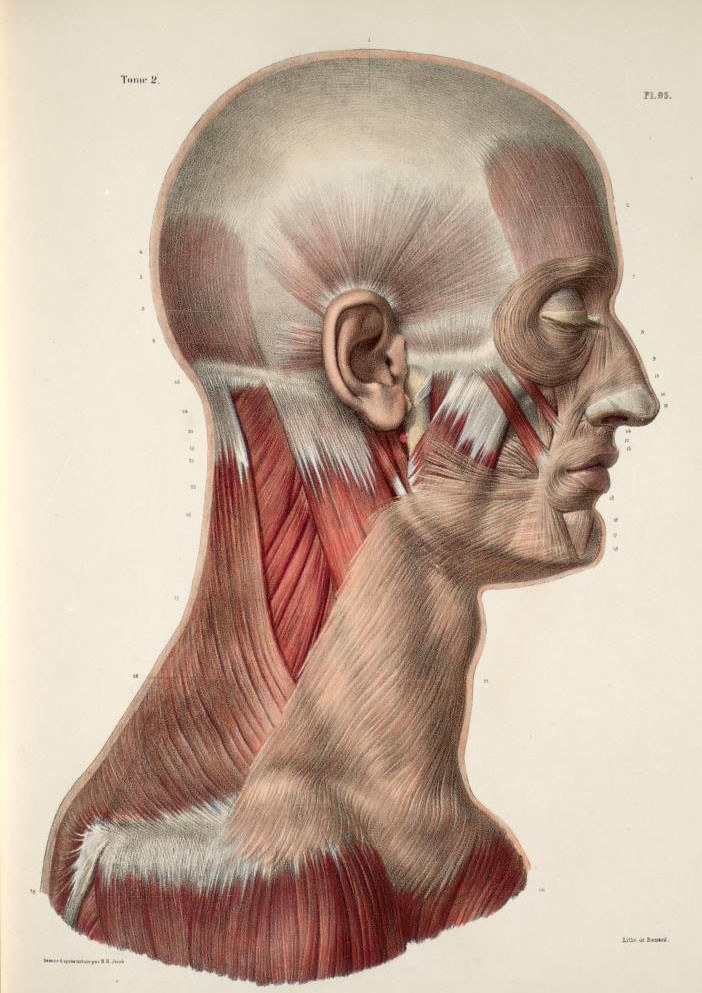
Every face is different, but injectors work from a standard map of the muscles that cause each line. Hover over or tap a row to highlight that area. Green areas are FDA-approved for Botox Cosmetic; gold areas are common off-label uses that experienced injectors also treat.
- 1Frown lines (glabella)Corrugator and procerus muscles. FDA label: 20 units over 5 sites. This is where most people start.
- 2Forehead linesFrontalis muscle. FDA label: 20 units over 5 sites, given together with the frown lines (40 units total).
- 3Crow's feetOrbicularis oculi muscle. FDA label: 24 units, 3 sites on each side.
- 4Neck bandsPlatysma muscle. FDA label (2024): 26 to 36 units, depending on the number of bands.
- 5Bunny linesNasalis muscle, the lines on the sides of the nose when you scrunch it. Off-label, small doses.
- 6Lip lines and "lip flip"Orbicularis oris muscle. Off-label, very small doses.
- 7Downturned mouth cornersDepressor anguli oris (DAO) muscle. Off-label.
- 8Dimpled chinMentalis muscle. Off-label.
- 9Jaw muscleMasseter, for teeth clenching or a slimmer jawline. Off-label, larger doses.
How many units?
Botox is measured in units of biological activity, not milliliters. The FDA-approved doses for Botox Cosmetic are:
| Area | Muscle | Labeled dose | Injection sites |
|---|---|---|---|
| Frown lines | Corrugators, procerus | 20 units | 5 (4 units each) |
| Forehead lines | Frontalis | 20 units, plus 20 for frown lines | 5 (4 units each) |
| Crow's feet | Orbicularis oculi | 24 units | 6 (3 per side, 4 units each) |
| Neck bands | Platysma | 26 to 36 units | 18 to 28 small doses |
A first full upper-face treatment (frown lines, forehead and crow's feet) is about 64 units on the label. In practice, doses are adjusted to the person: men often need more because their muscles are stronger, and people who want a softer, more natural look often get less, especially on the forehead.
Units are brand-specific
Other botulinum toxins, such as Dysport, Xeomin, Jeuveau and Daxxify, are measured differently. A unit of one brand is not equal to a unit of another, so doses can't be converted one-to-one.
Where most people start
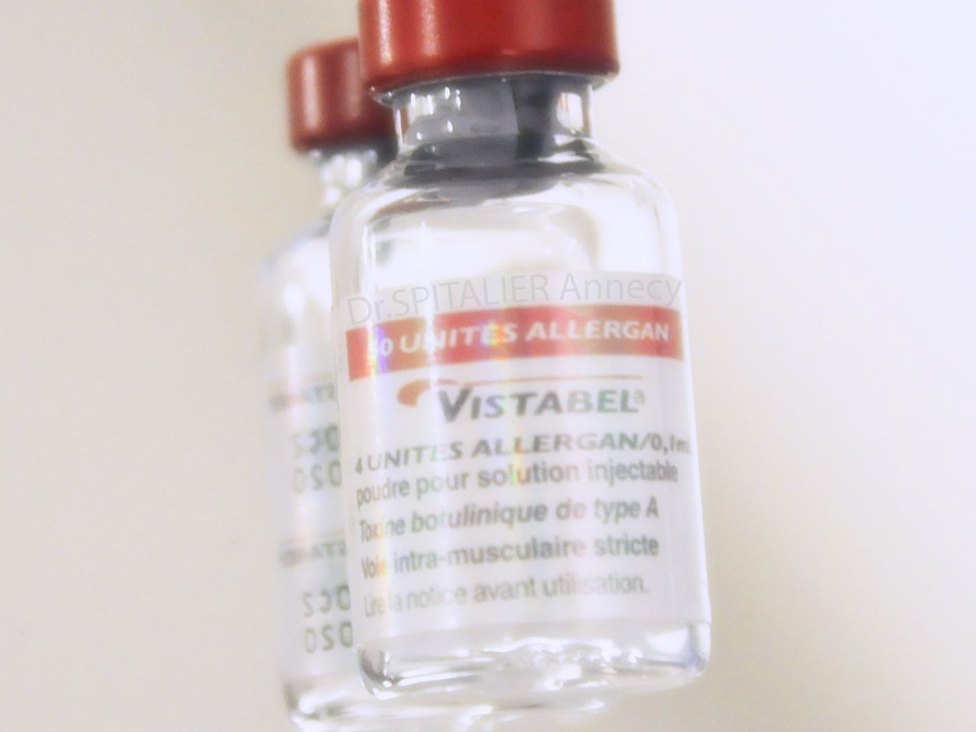
The usual first treatment is the frown lines between the eyebrows, the "11s." It's the most studied area, the original FDA approval, and the lines people notice most. Forehead and crow's feet are often added at the same visit or at the next one.
The forehead is usually treated with the frown lines, not alone. The forehead muscle is the only one that lifts the brows, so relaxing it by itself can let the brows drop and feel heavy.
What to expect
The visit
About 10 to 15 minutes. Tiny needles, no numbing usually needed. You can go back to work right away.
Days 2 to 3
The effect starts to show. It builds over about two weeks, which is when a follow-up or touch-up is done.
Months 3 to 4
Movement gradually returns as the nerve endings recover. Retreatment is usually no more often than every 3 months.
Aftercare
Stay upright and skip hard workouts, massages and rubbing the area for the rest of the day.
Safety
At cosmetic doses, Botox has a strong safety record. The most common side effects are small bruises, a headache and, less often, a drooping eyelid or brow that wears off as the dose does. Serious problems are rare, but the label carries a warning that the toxin can spread beyond the injection area, which is one reason injection should be done only by a trained, licensed clinician using genuine product.
Botox isn't recommended during pregnancy or breastfeeding, or for people with neuromuscular conditions such as myasthenia gravis, or an infection at the injection site. Tell your injector about all your medicines, including blood thinners and recent antibiotics.
For the skin itself, Botox pairs well with a nightly retinoid and daily sunscreen. My note on tretinoin for anti-aging covers how to start.
Sources: BOTOX Cosmetic (onabotulinumtoxinA) prescribing information, dosage and administration. drugs.com. Carruthers JD, Carruthers JA. Treatment of glabellar frown lines with C. botulinum-A exotoxin. Journal of Dermatologic Surgery and Oncology. 1992;18(1):17–21. 20th anniversary and history of cosmetic botulinum toxin type A. MDedge Dermatology. 2022. mdedge.com.
Join the waitlist
Peak Health is not open yet. It opens for direct primary care in Colorado Springs after Dr. Bennett's Army service ends. People on the waitlist hear first and are offered membership first.
No payment and no commitment.