
Health note
Clocks fall back November 1: how to protect your sleep
An extra hour this weekend, darker evenings for months. A few habits make the switch easy.
The short answer
- Clocks fall back one hour at 2 a.m. on Sunday, November 1. Sleep doctors favor permanent standard time; Colorado has a law to stay on daylight time year-round, but it only takes effect if Congress allows it and four other Mountain Time states join.
- Keep the same wake time, get outside in morning light, and watch for low mood that lasts more than two weeks as the days get shorter.
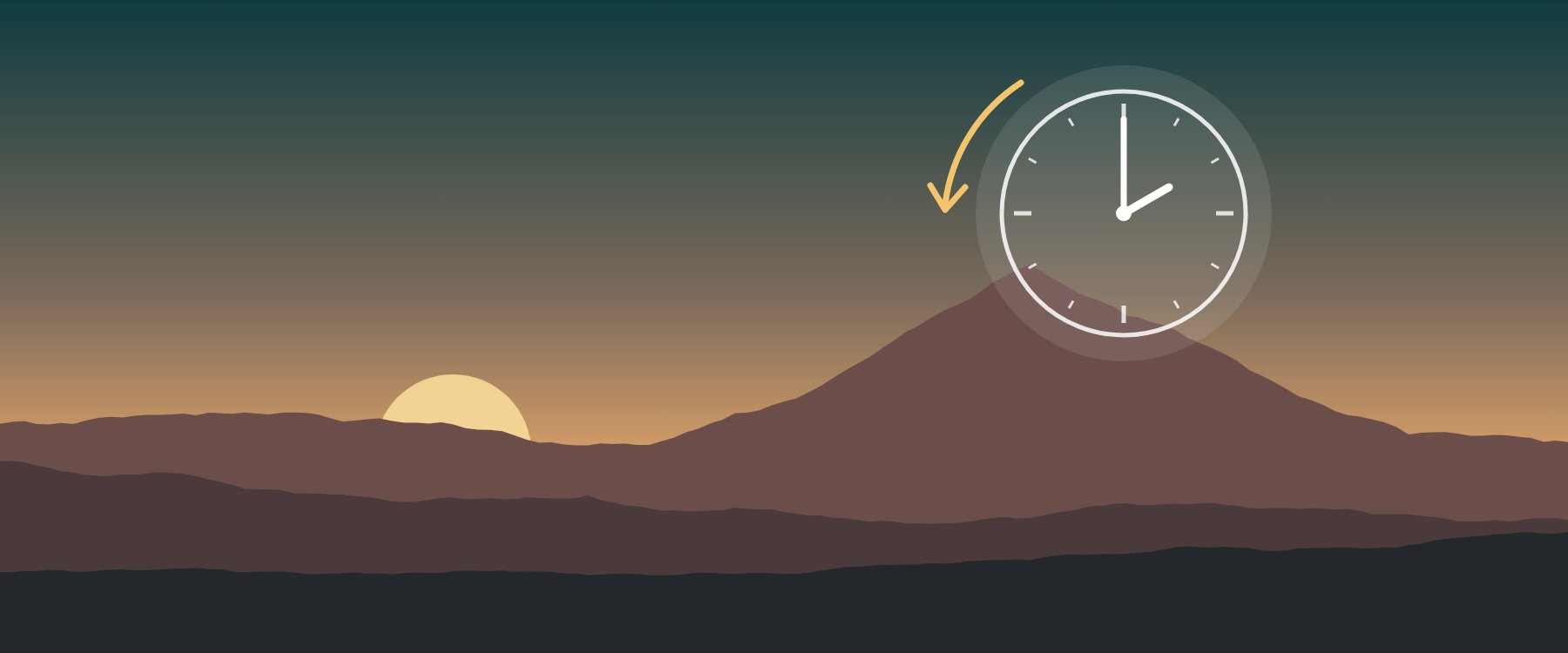
Daylight saving time ends at 2 a.m. this Sunday, November 1, when clocks go back to 1 a.m. The fall change is the gentler of the two, since you gain an hour. But it moves sunset an hour earlier for the rest of the winter, and that shift in light affects sleep and mood more than most people expect.
Colorado and the clock debate
In 2022, Colorado passed a law to stay on daylight saving time all year. It only takes effect if federal law changes to allow it and at least four other Mountain Time states pass similar laws. In July 2026, the U.S. House passed the Sunshine Protection Act, which would allow year-round daylight time nationwide; as of July it still needed to pass the Senate.
Sleep scientists see it differently. The American Academy of Sleep Medicine, along with the American Medical Association and other groups, recommends permanent standard time instead. Their reasoning: standard time keeps the clock closer to sunrise and sunset, and morning light is what sets the body's internal clock. Year-round daylight time would mean dark mornings through much of the winter. Either way, the twice-yearly switch is the part everyone agrees is hard on the body.
Getting through the switch
- Keep your wake time the same. Get up at your usual clock time on Sunday rather than sleeping in. A steady wake time does more for your body clock than an early bedtime.
- Get morning light. Spend 15 to 30 minutes outside in the first hours of the day, even on a cloudy day. Colorado's sunny winter mornings make this easier than in most places.
- Move during daylight. A lunchtime walk or a midday run catches the light you'll miss in the evenings.
- Dim the evenings. With sunset before 4:45 p.m. in December, evenings get long. Keep the last hour before bed dim and screen-free so sleep still comes on time.
- Change your alarm batteries. The clock change is a good reminder to test your smoke and carbon monoxide alarms.
When it's more than the winter blues
Feeling a little lower and more tired in winter is common. Seasonal affective disorder is different: it's a form of depression tied to the shorter days. Signs that last more than two weeks include pulling away from people, sleeping much more than usual, craving sugar and gaining weight. It's treatable with light therapy, talk therapy, medication or a combination, so talk with your doctor if it sounds familiar. If you're in crisis or thinking about harming yourself, call or text 988 any time.
For the full plan, see my sleep prescription and my note on how much sleep adults need.
Sources: Rishi MA, Cheng JY, Strang AR, et al. Permanent standard time is the optimal choice for health and safety: an American Academy of Sleep Medicine position statement. Journal of Clinical Sleep Medicine. 2024;20(1):121–125. doi:10.5664/jcsm.10898. Colorado General Assembly. HB22-1297, Daylight Saving Time Year Round. leg.colorado.gov. KKTV. House-passed daylight saving time bill could revive Colorado law to end clock changes. July 17, 2026. kktv.com. National Institute of Mental Health. Seasonal affective disorder (SAD): more than the winter blues. nimh.nih.gov.
Join the waitlist
Peak Health is not open yet. It opens for direct primary care in Colorado Springs after Dr. Bennett's Army service ends. People on the waitlist hear first and are offered membership first.
No payment and no commitment.