
Procedure guide
Numbing medicine and nerve blocks: what to know before, during and after
How local anesthetics work, how I make the shot hurt less, and the risks and aftercare I'd go over with you before any office procedure.
The short answer
- Local numbing medicine blocks pain signals in a small area while you stay fully awake. Lidocaine works in under 2 minutes and lasts 1 to 4 hours when mixed with epinephrine. A nerve block numbs a whole finger, toe or region by treating the nerve that supplies it.
- The shot itself can be made much gentler with a very thin needle, warmed and buffered medicine and a slow injection. True allergy to these medicines is rare.
Almost every procedure in these guides starts the same way, with numbing medicine. For many people, that shot is the part they dread most. It helps to know what the medicine does, how long it lasts and what I do to make the injection easier, because a calm, well-numbed patient makes every procedure go better.
Education, not a consent form
This guide explains what a consent visit covers. It doesn't replace the conversation before your own procedure, or advice about your own health.
How numbing medicine works
Nerves carry pain signals as tiny electrical impulses. Local anesthetics temporarily stop those impulses from passing, so the area goes numb while you stay awake and alert. You may still feel touch, pressure and tugging, since those travel on different nerve fibers, but not sharp pain. There are two main ways to use them. Local infiltration puts the medicine right under the skin where the procedure will happen. A nerve block puts it next to the nerve that supplies the area, numbing a whole finger, toe or region with fewer injections and without swelling the tissue being worked on.
| Starts working | Lasts | Good to know | |
|---|---|---|---|
| Lidocaine | Under 2 minutes | 30 to 60 minutes | The standard choice for short procedures |
| Lidocaine with epinephrine | Under 2 minutes | 1 to 4 hours | Epinephrine narrows blood vessels, so there's less bleeding and the numbness lasts longer |
| Bupivacaine | About 5 minutes | 2 to 4 hours | Longer relief afterward; used for nerve blocks and procedures that stay sore |
| Numbing cream or gel | Slower; applied ahead of time | Varies | Numbs the surface before a needle, or small open cuts in children, sometimes with no shot at all |
Who it's for
- Almost any office procedure: stitches, biopsies, draining an abscess, removing a nail, setting a finger, joint injections.
- Nerve blocks for fingers and toes, and for larger areas such as the hand, foot, ear, forehead or lip, where one or two injections can replace many.
- Pain relief on its own, for example a block to ease a fracture or a dislocated finger while it's being treated.
Who needs a different plan
- A true allergy to a local anesthetic. This is rare. Most reactions people remember were fainting or a racing heart from epinephrine or nerves. If there's real doubt, a medicine from a different chemical family or allergy testing is an option.
- Poor circulation in the fingers or toes, such as from peripheral artery disease, where I'd leave out the epinephrine.
- Infected tissue. Numbing medicine works poorly in inflamed, acidic tissue, so a nerve block farther up is often better.
- Pregnancy. Lidocaine is used routinely; bupivacaine is avoided.
- Serious heart rhythm or liver problems, which lower the safe dose.
- Very large or deep procedures, which need sedation or an operating room.
Benefits and risks
Benefits
You stay awake, with no fasting and no recovery from sedation. You can drive yourself home after most procedures. Numbness often lasts into the first hours afterward, when soreness would be worst.
Common risks
A sting or burn for a few seconds as the medicine goes in. A small bruise. A brief racing heart or shakiness from epinephrine. Feeling faint from the needle.
Less common risks
Numbness that's patchy or wears off early, which is fixed with more medicine. Bleeding or infection at the injection site. Tingling that lingers for hours to days after a nerve block.
Rare risks
Lasting nerve injury. A true allergic reaction. Too much medicine reaching the bloodstream, which can cause ringing in the ears, a metallic taste, numb lips, and in severe cases seizures or heart rhythm problems. Doses are calculated by body weight to prevent this.
Epinephrine in fingers and toes
For decades, doctors were taught never to use epinephrine in fingers, toes, the nose or the ears, for fear of cutting off blood flow. The evidence now shows it's safe in these areas for people with normal circulation, and it means less bleeding and longer relief.
How I make the shot hurt less
- A very thin needle, 27 to 30 gauge.
- Buffered medicine. Lidocaine is acidic, which is why it burns. Mixing nine parts lidocaine with one part sodium bicarbonate takes much of the sting away.
- Warmed medicine, at least to room temperature, which adds to the effect of buffering.
- A slow, steady injection into the layer just under the skin, which hurts less than injecting into the skin itself.
- Distraction: pinching or vibrating the skin nearby, conversation, or a video for kids.
- Numbing cream or cold spray first, when there's time.
Alternatives
- Numbing cream or gel alone, for small procedures and for some cuts in children.
- Cold spray or ice, for very quick procedures such as a single injection.
- Nothing, for procedures that take seconds, such as freezing a wart, where the shot would hurt more than the treatment.
- Sedation or general anesthesia at a surgery center or hospital, for larger procedures or for people who can't tolerate being awake.
Step by step
- CheckI ask about allergies, past reactions, medications, heart and liver conditions and pregnancy, and work out a safe dose for your weight.
- CleanThe skin is cleaned with antiseptic.
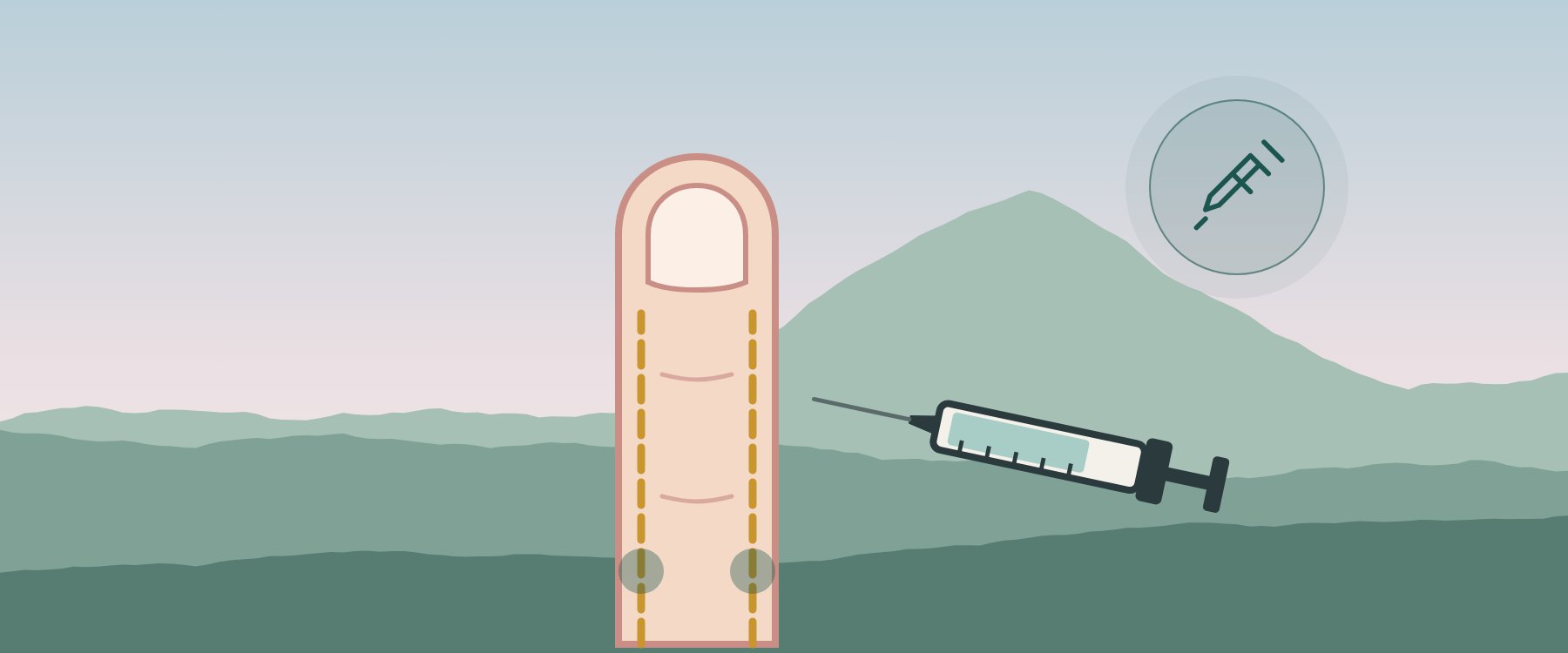
- InjectFor infiltration, the medicine goes in slowly under the skin around the area. For a finger or toe block, a small amount is placed on each side at the base. I pull back on the syringe first to be sure the needle isn't in a blood vessel.
- WaitLidocaine works within a couple of minutes. A nerve block or bupivacaine takes 5 to 10 minutes or more.
- TestBefore starting, I check that the area is numb to a sharp touch. If you feel anything sharp at any point, tell me, and I'll add more.
Aftercare
The short version
Protect the numb area until feeling returns, and take your first dose of pain medicine before the numbness wears off.
- Protect it. A numb finger can't warn you about heat, cold or pressure. Be careful with hot drinks, stoves, car doors and tight bandages.
- After numbing in the mouth or lip, avoid chewing until feeling returns, so you don't bite your cheek or tongue.
- Get ahead of the pain. Take acetaminophen or ibuprofen before the numbness fades, if they're safe for you.
- Tingling as it wears off is normal.
- Driving is fine after most blocks, unless your foot, leg or dominant hand is numb.
When to call
- Numbness, tingling or weakness that lasts more than a day.
- A finger or toe that stays pale, blue or cold after the numbness should have worn off.
- Increasing redness, swelling or pus at the injection site.
- Hives, swelling of the face or throat, or trouble breathing: call 911.
Which procedures Peak Health offers in the office will be confirmed before opening. You can see the full list on the Services page, and the rest of these guides in the procedure guides library.
Sources: Latham JL, Martin SN. Infiltrative anesthesia in office practice. American Family Physician. 2014;89(12):956–962. aafp.org. Yurgil JL, Hulsopple CD, Leggit JC. Nerve blocks: part I. Upper extremity. American Family Physician. 2020;101(11):654–664. aafp.org.
Join the waitlist
Peak Health is not open yet. It opens for direct primary care in Colorado Springs after Dr. Bennett's Army service ends. People on the waitlist hear first and are offered membership first.
No payment and no commitment.