
Procedure guide
Tendon, bursa and trigger point injections: what to know before, during and after
Where these injections help, where the evidence says they don't, and the risks, alternatives and aftercare I'd go over with you first.
The short answer
- Steroid injections around a tendon or into a bursa can calm pain for weeks, and they work especially well for trigger finger. For tennis elbow they help early but lead to more relapses by one year than doing nothing, so I rarely use them there.
- Trigger point injections release tight, painful knots in a muscle. For all of these, the shot is a way to make rehab possible. It doesn't replace it.
Not every sore spot is inside a joint. Tendons, the small fluid sacs called bursae that cushion them, and the muscles themselves all cause pain that can be treated with a well-placed injection. These are quick office procedures. They're also easy to overuse, so the most useful thing I can do is be honest about which ones are worth it.
Education, not a consent form
This guide explains what a consent visit covers. It doesn't replace the conversation and signed form before your own procedure, or advice about your own injury.
Three kinds of injection
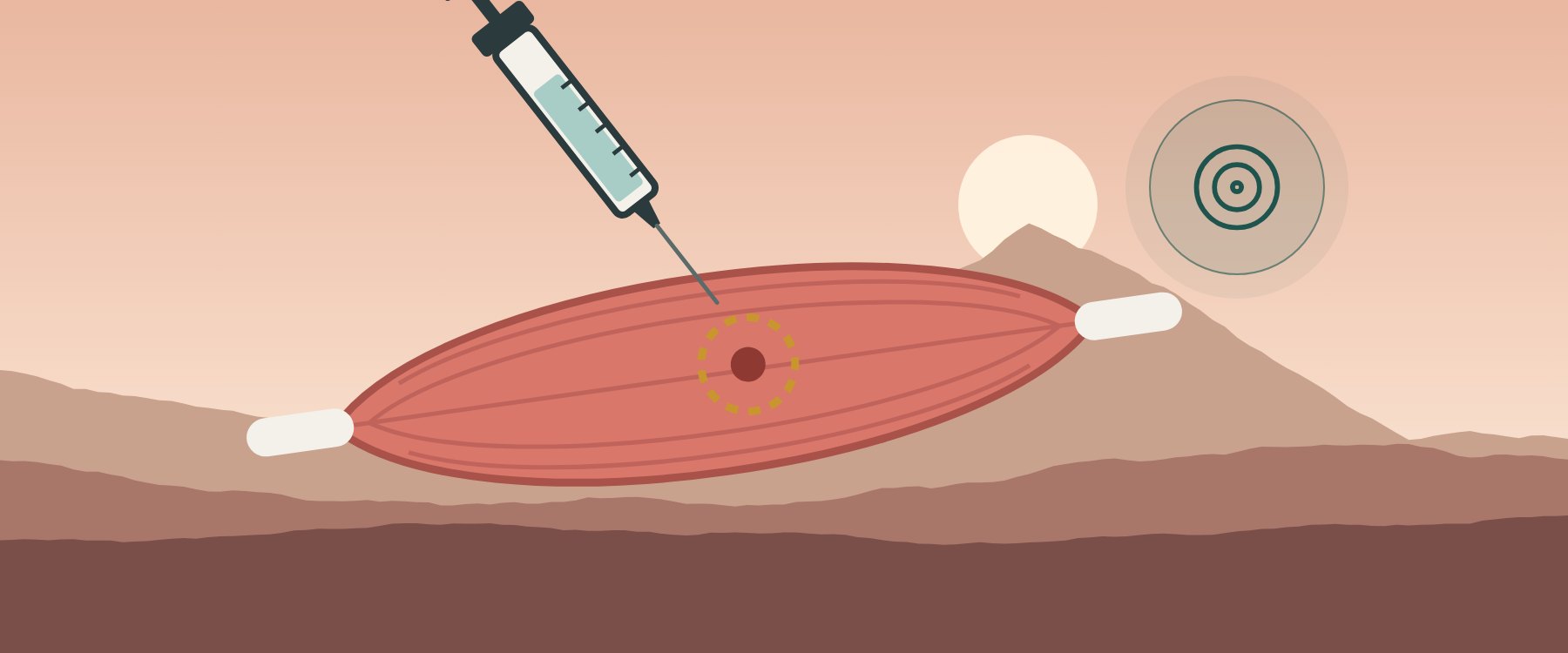
A tendon sheath injection places a small amount of steroid and numbing medicine in the sleeve around a tendon, never into the tendon itself. A bursa injection places it inside an inflamed bursa. A trigger point injection is different: a thin needle is passed into a tight, tender band of muscle, usually with a little numbing medicine and no steroid, to make the knot release.
| What the evidence shows | My approach | |
|---|---|---|
| Trigger finger | Cures 54% to 86%, with benefit lasting a year; relapse in about 12% after one injection | A good first treatment |
| Thumb-side wrist tendons (de Quervain) | Better than splinting alone, with improvement within a week | A good option, with a splint |
| Outer hip pain (greater trochanter) | Better than usual care at 6 weeks and 3 months; no difference by 6 to 12 months | Reasonable for a bad flare, with hip strengthening |
| Shoulder impingement and rotator cuff | Small relief for up to 4 weeks; works best early and with physical therapy | Sometimes, to make rehab tolerable |
| Carpal tunnel | Short-term relief; symptoms return in up to half | A bridge while deciding on surgery, or in pregnancy |
| Tennis elbow | Relief for 4 to 6 weeks, then more relapses than placebo at one year | Rarely. Loading exercises do better |
| Trigger points in muscle | Short-term relief; the needle seems to matter more than what's injected | For stubborn knots, with stretching and strengthening |
Who it's for
- Pain that's blocking daily life, work, sleep or rehab, after a fair trial of rest, exercises and over-the-counter treatment.
- Trigger finger and de Quervain tendon pain, where an injection is often the best first step.
- A flare of bursitis at the hip, shoulder or elbow that isn't caused by infection.
- Tender, tight bands in the neck, shoulder or back muscles that reproduce your pain when pressed.
Who should wait, or choose something else
- Any sign of infection in the area, including a red, hot, swollen bursa at the elbow or knee, which may be infected and needs fluid testing first.
- Achilles and patellar tendon pain. Steroid injected around these weight-bearing tendons can weaken them and has been linked to ruptures, so I don't inject them. See the Achilles exercise guide.
- A recent tendon tear, or an injury that hasn't been properly diagnosed.
- Blood thinners or a bleeding disorder, which call for a conversation first, especially for deeper muscle injections.
- Diabetes. Not a reason to skip it, but steroid can raise blood sugar for several days.
Benefits and risks
Benefits
Relief within days that can last weeks, and much longer for trigger finger. A window to start stretching and strengthening. Done in a few minutes in the office.
Common risks
A sting from the needle. A flare of soreness for a day or two. Aching in the muscle after a trigger point injection. Higher blood sugar for a few days with steroid if you have diabetes.
Less common risks
A small dent or a lighter patch in the skin where steroid was placed near the surface, which is more visible on darker skin and can be permanent. Bruising. Pain returning as the effect wears off.
Rare risks
Infection. Weakening or rupture of a tendon. Nerve irritation. With trigger points in the chest wall or upper back, a punctured lung, which careful needle direction is meant to prevent.
Why I rarely inject tennis elbow
A steroid shot makes tennis elbow feel better for about a month. But by one year, more than half of people who got one have relapsed, compared with 12% who got a placebo. Physical therapy has a relapse rate of 8% to 29%. A gradual loading program is slower, and it's the treatment that lasts.
Alternatives
- Loading and stretching exercises, the treatment with the best long-term results for most tendon problems.
- Splints and braces: a thumb splint for de Quervain, a night splint for carpal tunnel or trigger finger.
- Anti-inflammatory gel or pills, ice or heat, and changing the activity that set it off.
- Massage, stretching and dry needling for trigger points.
- Surgery for trigger finger, carpal tunnel or de Quervain that keeps coming back.
- Time. Many of these settle over weeks to months.
Step by step
- CheckI examine the area and find the exact structure causing the pain. We talk through the options and you sign consent.
- Find the spotThe point is found by feel and marked. Ultrasound can show the tendon, sheath or bursa so the medicine is placed exactly.
- CleanThe skin is cleaned with antiseptic. A cold spray can numb the surface.
- InjectFor a tendon sheath or bursa, a thin needle places a small mix of numbing medicine and steroid. If I feel resistance, the needle is in the tendon and I reposition it. For a trigger point, the needle is passed into the knot, often several times, and the muscle may twitch as it releases.
- RecheckA bandage goes on, and we test the area a few minutes later. The numbing medicine often gives relief right away.
Aftercare
The short version
Rest the area for a day or two, ice any soreness, then get back to the exercises. That's what keeps the pain from coming back.
- The first hours: the numbing medicine wears off, and the pain may return until the steroid starts working over the next few days.
- A flare of soreness is common in the first day or two. Ice and acetaminophen help.
- Go easy on the tendon for about two weeks: no heavy lifting or hard gripping with that arm, no sprinting or jumping on that leg.
- After a trigger point injection, move and gently stretch the muscle through its full range the same day. Heat helps the ache.
- Diabetes: check your blood sugar more often for several days.
- Repeat injections are limited. If one hasn't worked, a second is less likely to, and we'd look at other options.
When to call
- Increasing redness, warmth, swelling or fever.
- A sudden pop or new weakness in the tendon.
- Numbness or tingling that doesn't fade within a few hours.
- Shortness of breath or chest pain after an injection near the chest or upper back: call 911.
- Blood sugars running much higher than usual.
Which procedures Peak Health offers in the office will be confirmed before opening. You can see the full list on the Services page, and the rest of these guides in the procedure guides library.
Sources: Foster ZJ, Voss TT, Hatch J, Frimodig A. Corticosteroid injections for common musculoskeletal conditions. American Family Physician. 2015;92(8):694–699. aafp.org. Creech-Organ JA, Szybist SE, Yurgil JL. Joint and soft tissue injections. American Family Physician. 2023;108(2):151–158. aafp.org. Alvarez DJ, Rockwell PG. Trigger points: diagnosis and management. American Family Physician. 2002;65(4):653–660.
Join the waitlist
Peak Health is not open yet. It opens for direct primary care in Colorado Springs after Dr. Bennett's Army service ends. People on the waitlist hear first and are offered membership first.
No payment and no commitment.